


Canon’s excellent R6 III dominated the conversation for most of the year, but the arrival of the Sony a7 V changes the landscape entirely. Sony’s latest full-frame hybrid camera brings major improvements in speed, processing power, and performance—making it a serious contender for the best all-round camera available today.
Design and Handling: Familiar Yet Improved
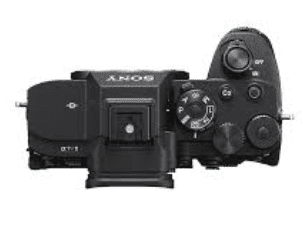
At first glance, the Sony a7 V looks almost identical to the a7 IV. It retains the same chassis, control layout, and a combination of one UHS-II SD slot plus a hybrid CFexpress Type A/SD slot. The body weighs around 695g with a battery and card.
You’ll find familiar ergonomics, responsive controls, and Sony’s improved menu system. A few notable upgrades include:
Key Body Features
- 3.69M-dot EVF (unchanged)
- 2.1M-dot fully articulating LCD borrowed from the a7R V
- Dual USB-C ports (one for PD charging, one for data)
- Improved weather sealing
- Z-series battery with dramatically better endurance thanks to the new processor
The biggest update lies inside: Sony’s Bionz XR2 processor paired with an all-new 33MP partially-stacked full-frame sensor. This combination boosts performance across autofocus, image quality, readout speed, and battery efficiency.
Image Quality and Sensor Performance
The partially stacked 33MP sensor is the highlight of the a7 V. Typically, stacked sensors sacrifice some dynamic range, but Sony managed to improve over the a7 IV. Shadow detail and noise handling are noticeably better.
Mechanical vs Electronic Shutter
- Mechanical shutter (10 fps) delivers the cleanest files with stronger shadow detail.
- Electronic shutter (up to 30 fps) is extremely fast but shows slightly reduced shadow clarity.
Compared to the a7 IV, the a7 V offers:
- Cleaner high-ISO performance
- More detail retention in low light
- Faster readout and reduced rolling shutter
Autofocus: Sony Raises the Bar Again
Autofocus is where the a7 V truly excels. The new processor features an integrated AI unit that handles:
- Subject tracking
- Exposure
- White balance
- Recognition of torsos, limbs, and heads
This is the first time Sony uses a single unified processor for both imaging and AI tasks.
Supported Tracking Modes
- Humans (eye, face, body)
- Animals and birds
- Insects
- Cars, trains, planes, motorcycles
Even in busy scenes with obstacles moving between the subject and lens, tracking remains stable and accurate.
The addition of Pre-Capture Mode allows recording up to one second of action before pressing the shutter—excellent for sports and wildlife.
Burst Shooting and Buffer
- Mechanical shutter: 10 fps, virtually unlimited buffer
- Electronic shutter: 30 fps with around 75 frames before slowing
- Lossless compressed RAW now supported at full speeds
- Pre-capture for decisive-moment shooting
Performance is competitive across the board, especially for sports and action.
Video Performance: Excellent 4K, But No High-Res Modes
Jordan Drake’s testing reveals that the a7 V dramatically outperforms the a7 IV in video.
Major Video Improvements
- 4K/60p full-frame, no crop
- 4K/120p with APS-C crop
- Extremely fast readout (~10ms) comparable to a7S III and FX3
- Much better autofocus during video
- Strong overheating resistance (2+ hours indoors)
Limitations
- No 6K or 7K recording
- No open-gate modes
- No RAW video, internal or external
- Stabilization is still behind Panasonic despite improvements
Dynamic Active Mode adds stabilization but introduces a large crop and some motion blur at slower shutters.
Still, as a 4K video camera, the a7 V is among the best in its class.
Special Quirks and Features
4K Angle of View Priority
This new menu option reduces additional crop in some modes, but disables internal noise reduction. You will want to test both settings depending on your workflow.
Thermal Performance
Sony engineered impressive heat control. Even high-bitrate All-I 4K/60p recording shows no overheating until the battery dies—excellent for long events and interviews.
Sony a7 V vs the Competition
The Sony a7 V’s primary rivals include:
- Canon EOS R6 III
- Nikon Z6 III
- Panasonic Lumix S1 II
Advantages over Canon R6 III
- Better image quality in shadows
- Slightly stronger AF tracking
- Faster readout
- Larger E-mount lens ecosystem
Where Canon leads
- More versatile hybrid video features
- 7K oversampling
- Internal RAW video
The differences, however, are minor—and both cameras rank among the best hybrid bodies ever released.
Final Verdict: A Top-Tier Hybrid Camera
The Sony a7 V is a clear evolution of the a7 line. Its new sensor, AI-driven autofocus, improved battery life, fast readout, and robust 4K video capabilities make it one of the most balanced full-frame mirrorless cameras on the market.
If you value the extensive E-mount ecosystem and want a camera capable of excelling at almost any assignment—portraits, sports, wildlife, events, and video—the a7 V is a superb choice.
While Canon’s R6 III still shines for high-resolution hybrid workflows, the a7 V stands firmly as one of 2025’s strongest camera releases.
