

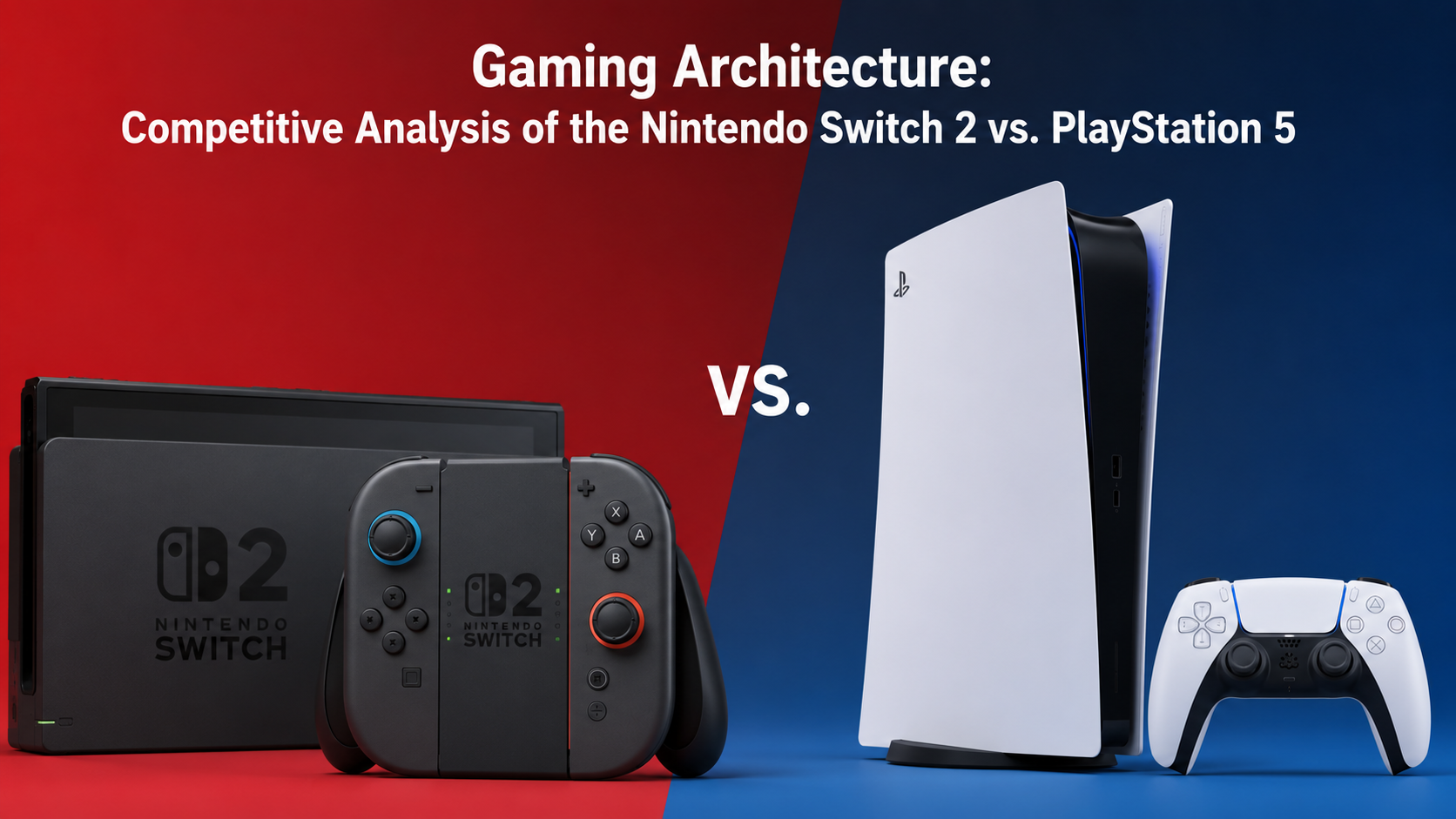
Since its successful launch on June 5, 2025, the Nintendo Switch 2 has established itself as a dominant force in the hybrid console market. While the PlayStation 5 continues to cater to a high-fidelity, stationary audience, the Switch 2’s specialized hardware architecture—built upon custom Nvidia Tegra T239 silicon—provides distinct functional advantages that differentiate it from Sony’s AMD-based platform. This intelligence brief deconstructs four core operational advantages that define the Switch 2’s hybrid ecosystem.
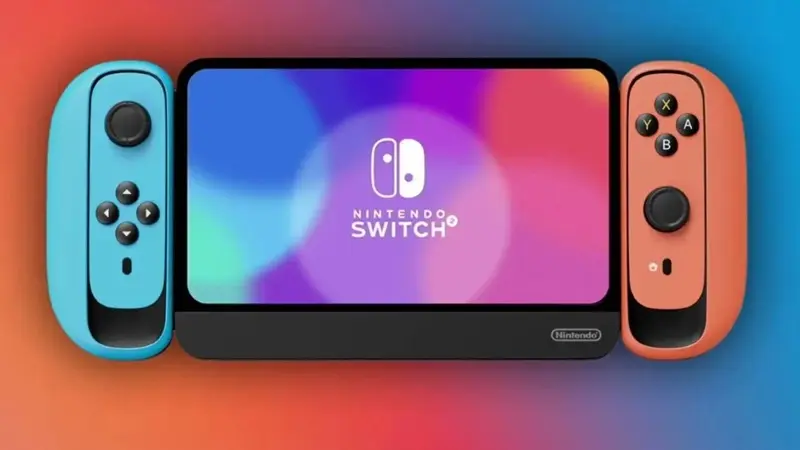
Technical Mechanics: Performance & Infrastructure
The Switch 2’s performance profile is fundamentally defined by its integration of Nvidia’s machine learning-driven hardware acceleration.
- Nvidia DLSS Upscaling: Unlike the PlayStation 5, which relies on AMD’s FSR or console-specific upscalers (like PSSR on the PS5 Pro), the Switch 2 leverages Deep Learning Super Sampling (DLSS). By utilizing AI algorithms to recreate high-resolution images from lower rendering targets, the Switch 2 allows software like Pragmata to maintain smooth frame rates and visual fidelity—often upscaling from 540p to 1080p in docked mode—despite having a lower raw TFLOPS count than its stationary competitors.
- MicroSD Express Storage: Nintendo has modernized its storage architecture to support microSD Express, a format significantly faster than traditional microSDXC cards. This allows for near-SSD-like load times while maintaining the convenience of a slide-in expansion slot. Unlike the PS5, which requires a complex internal NVMe SSD installation process involving removing console faceplates and ensuring compatibility with specific heatsink specs, the Switch 2’s storage upgrade remains entirely user-friendly.
Strategic Deployment: Social & Ecosystem Integration
Nintendo has aggressively positioned the Switch 2 as a “social hub,” prioritizing wireless interoperability and communication features that are not native to the PlayStation 5 environment.
| Feature | Operational Mechanism | Strategic Benefit |
| GameShare Wireless | Enables local wireless multiplayer sessions across multiple Switch 2 or original Switch units using a single game copy. | Eliminates the “split-screen” requirement; each player utilizes their own dedicated screen for a superior co-op experience. |
| Integrated GameChat | Native 480p-capable video calling and game-stream overlay functionality. | Transforms the console into a social communication tool, featuring dynamic filters (e.g., Star Fox face-mapping) for personalized interaction. |
Structural Vulnerabilities and Strategic Limitations
- Market Price Sensitivity: Recent data from May 2026 indicates that the Switch 2’s market is highly price-sensitive. Following Nintendo’s announcement of global MSRP increases—effective September 1, 2026—Japanese sales surged by over 100% in a single week as consumers rushed to beat the ¥10,000 price hike. This suggests that while Nintendo’s hybrid ecosystem is dominant, its volume is heavily tethered to historical price expectations.
- Production Scaling vs. Tariffs: Despite Nintendo’s target to produce 20 million units by March 2027, the company has had to revise sales forecasts downward. The combined impact of AI-driven RAM shortages and emerging global tariffs has pushed hardware costs higher, necessitating the aforementioned price increases and potentially slowing the transition rate from the original Switch to the new hardware.
- Platform Lifecycle: As of May 2026, the Switch 2 has moved nearly 20 million units since its June 2025 release. However, the original Switch remains the second-best-selling console in history. Nintendo is currently executing a delicate dual-platform support strategy, ensuring first-party titles continue to serve the massive legacy install base while simultaneously building the Switch 2 library with major third-party support from partners like Capcom, Square Enix, and Bandai Namco.
Conclusion
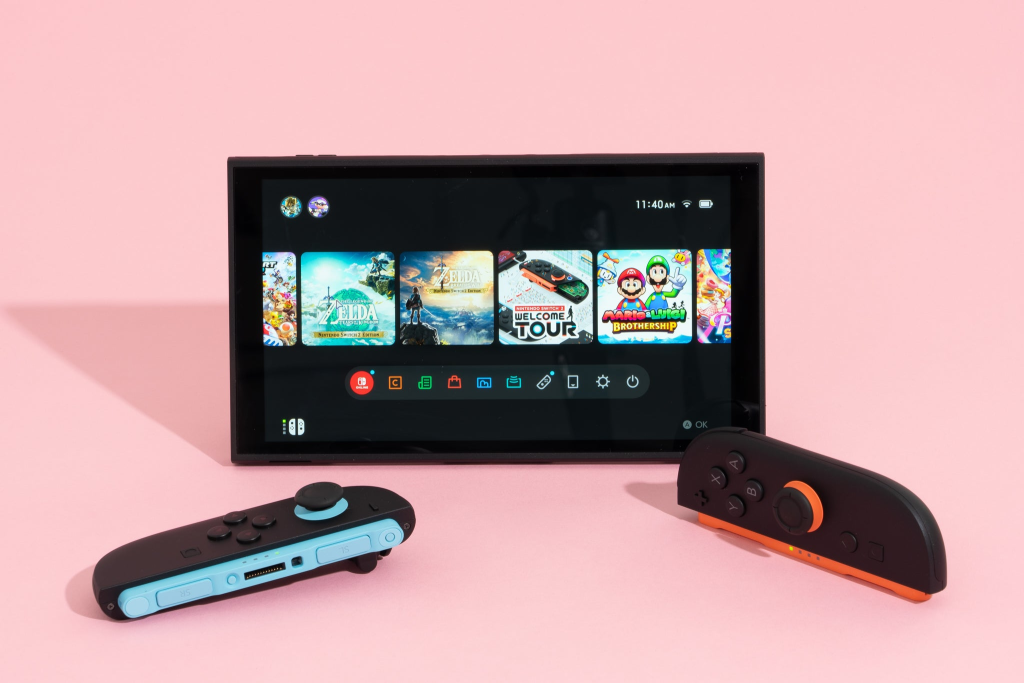
The strategic verdict for mid-2026 is that the Switch 2 and PlayStation 5 occupy fundamentally distinct operational categories. While the PS5 remains the platform of choice for raw computational power, the Switch 2’s reliance on Nvidia’s DLSS and its highly integrated social feature set—such as GameShare and GameChat—allows it to maintain a dominant, distinct market position. Nintendo’s hybrid strategy is currently facing a “stress test” as it attempts to manage global price sensitivity against rising hardware manufacturing costs, but its ability to sustain a high “run-rate” of sales proves that its hybrid differentiation remains a powerful competitive asset.
Also Read : Technical Executive Profile: S. “Soma” Somasegar (1966 – 2026)
