

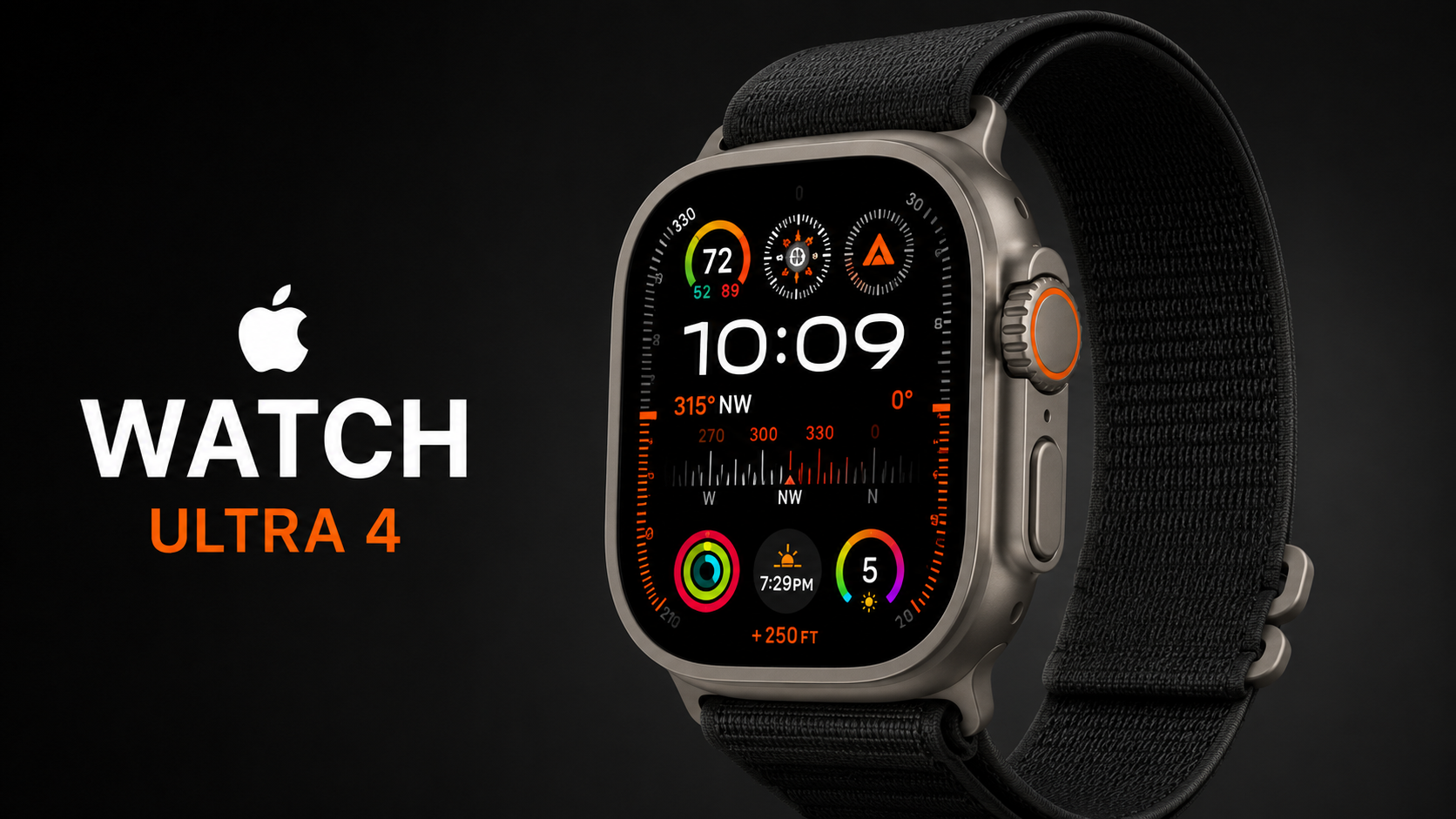
The continuous evolution of Apple’s premium wearable line points toward a major milestone. If current supply chain reports and industry leaks are accurate, the upcoming Apple Watch Ultra 4 is shaping up to be the most significant overhaul the rugged smartwatch line has seen since its initial debut.
Expected to arrive in September 2026 alongside the iPhone 18 Pro lineup, early leaks from firms like DigiTimes and leading industry analysts hint at a shift away from minor internal updates toward a comprehensive mechanical and structural redesign. Here is a technical breakdown of the architectural shifts, health sensor arrays, and performance upgrades expected for the Ultra 4.
Technical Mechanics: The First Major Redesign Loop
Since launching in 2022, the Apple Watch Ultra has retained an identical physical chassis—a deliberate move to preserve absolute structural durability for endurance athletes. The Ultra 4 is widely expected to break this mold, introducing structural changes to improve ergonomics and day-long wearability.
- The 15% Slipped Titanium Profiles: A primary friction point for users tracking overnight health metrics has been the bulky, thick chassis profile of the existing Ultra housing. Multiple supply-chain leaks suggest Apple is engineering a slimmer, optimized internal component layout to achieve a chassis that is roughly 15% thinner and noticeably lighter, without reducing the high-grade titanium casing strength or the flat sapphire crystal face protection.
- The Revamped 8-Sensor Array Moat: The backplate of the next-generation Ultra is expected to completely restructure Apple’s standard medical tracking ring. Moving away from heavy software algorithm estimation, the Ultra 4 is rumored to double its physical sensor components to a dense 8-sensor ring layout. Capturing pure, direct hardware metrics drastically reduces background processor computation, increasing tracking reliability while lowering power drain.
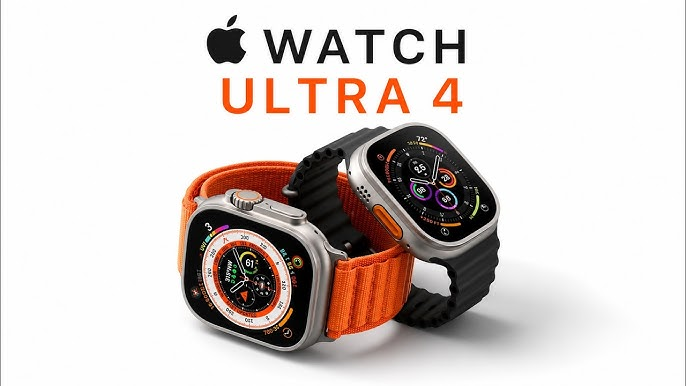
- The OLED Optimization Pivot: While early engineering roadmaps aimed to transition the premium smartwatch line to a cutting-edge MicroLED display pane, manufacturing delays have reportedly forced a tactical pivot. The Ultra 4 will retain an OLED panel, though it is tipped to adopt optimized low-temperature polycrystalline oxide (LTPO) backplane scaling to lower energy consumption during low-power, always-on states.
Predictive Health Metrics and Silicon Architecture
Beyond its physical exterior, the core focus of watchOS 27 and the next-generation S-series chip centers on advanced personal telemetry and deeper system automation.
1. The Hypertension Alert Protocol
For multiple product generations, Apple has chased cuff-less blood pressure tracking. The Ultra 4 is heavily tipped to debut an advanced, trend-focused hypertension alert system. Rather than attempting to match the exact millimeter-of-mercury ($\text{mmHg}$) readouts of standard medical upper-arm cuffs, the watch’s updated sensor array tracks relative baseline trends. If the system logs concerning blood pressure spikes or prolonged elevated pressure patterns, it prompts a high-priority notification instructing the user to consult a medical professional.
2. S11 Neural Edge Processing
The transition to watchOS 27 marks a definitive software cutoff for older wearables. The original first-generation Apple Watch Ultra lacks the hardware-level neural processing cores required to run the revamped, context-aware Siri AI platform local to the edge. The Ultra 4’s expected S11 SiP (System-in-Package) will integrate a highly optimized, multi-core Neural Engine. This hardware acceleration allows the watch to securely manage local on-device calculations, power a dynamic app grid that surface’s user intent patterns, and significantly improve battery conservation.
Hardware Architecture and Launch Spec Matrix
This structural matrix logs the leaked technical specifications, expected pricing models, and architectural features defining the Apple Watch Ultra 4 development cycle heading into late 2026.
| Performance Node | Leaked Technical Specification | Functional / Structural Improvement | Expected Market Entry Metrics |
| Chassis Build | Slimmed Aerospace-Grade Titanium | Significantly reduces physical wrist friction during overnight sleep metrics. | September 2026 Launch Window |
| Core Processor | Apple S11 Silicon (With Neural Engine) | Local edge compute routing for Siri AI contextual data streams. | Embedded standard architecture |
| Sensor System | Dense Hardware-Driven 8-Sensor Ring | Eliminates software interpretive error loops for blood pressure tracking alerts. | Upgraded medical accuracy tier |
| Power Storage | Efficient Low-Power Component Optimization | Expected to push Low Power Mode thresholds up to 72 continuous hours. | Holds baseline capacity size |
| Retail Allocation | 49mm Single High-Durability Form | Standardizes strap sizing compatibility across legacy Ultra bands. | Estimated Pricing: $799 – $849 |
Strategic Upgrade Guidelines: Should You Wait?
To optimize your wearable hardware cycle, evaluate your upgrade pathway against these clear, data-driven parameters:
- Hold Out if You Demand Actionable Health Diagnostics: If your active lifestyle choices require cutting-edge medical telemetry, waiting for the September launch is the mathematically correct choice. The addition of trend-based blood pressure metrics combined with a hardware-driven 8-sensor backplate makes the Ultra 4 a much more complete health-tracking station than past incremental releases.
- Deploy an Ultra 3 Only if Slashed Price Floors Exist: Because authorized third-party electronics retailers are clearing warehouse stock ahead of the autumn refresh cycle, the current Ultra 3 can be found at steep discounts down to a $699 floor. If you require a highly rugged outdoor navigation computer right now and do not value thinner chassis ergonomics or blood pressure trending alerts, capitalizing on these mid-summer clearances gets you 90% of the baseline outdoor experience while saving substantial capital.
- Enforce Device Retraction for First-Gen Ultra Owners: If you are currently operating a first-generation 2022 Apple Watch Ultra, your hardware is hitting a definitive software wall. Lacking the onboard neural silicon required to drive the upcoming watchOS 27 system enhancements, your device will miss out on the next major wave of Apple Intelligence updates, making the incoming generation a highly justified physical and digital replacement loop.
