


The corporate threat landscape for cloud infrastructure has experienced a highly sophisticated, architectural shift. In a detailed public service announcement issued by the Federal Bureau of Investigation (FBI) via the Internet Crime Complaint Center (IC3), security officials have warned global organizations of an aggressive, rapidly scaling Phishing-as-a-Service (PhaaS) platform known as Kali365.
- Technical Mechanics: Exploiting the OAuth 2.0 Device Authorization Grant
- 1. The Legitimate Infrastructure Exploit
- 2. The Trust Matrix Hijack
- 3. The Passwordless Authorization Cascade
- Software Infrastructure: Commoditizing Grey-Zone Espionage
- Enterprise Defense & Mitigation Matrix
- Systemic Risk Profiles by Enterprise Industry
- Conclusion
First detected by automated telemetry networks in April 2026 and distributed primarily as a criminal subscription network over specialized Telegram channels, Kali365 bypasses traditional corporate perimeter defenses. What makes this framework uniquely dangerous to enterprise information security is its ability to bypass multi-factor authentication (MFA) protocols completely, executing persistent cloud account takeovers without requiring—or ever intercepting—the victim’s actual login credentials or passwords.
This technical analysis brief evaluates the underlying OAuth 2.0 exploitation mechanics, the weaponization of legitimate Microsoft workflows, and the strategic system-level safeguards required to isolate corporate environments from token-harvesting syndicates.
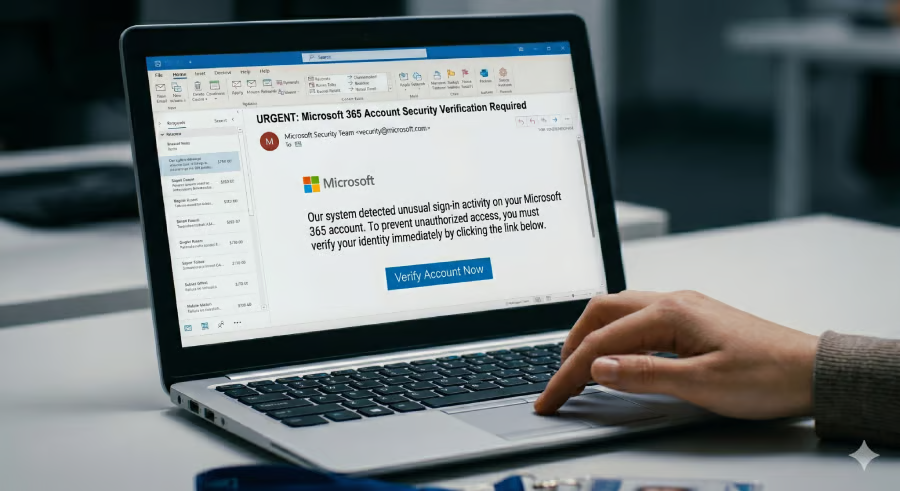
Technical Mechanics: Exploiting the OAuth 2.0 Device Authorization Grant
Traditional phishing mechanisms rely on deceptive look-alike landing pages to trick users into typing their alpha-numeric credentials into a fraudulent database. Modern identity protection frameworks—including FIDO2 hardware keys and multi-factor authentication (MFA) prompts—have successfully made these legacy credential-harvesting tools obsolete.
Kali365 bypasses these defensive barriers by completely abandoning credential theft. Instead, the platform directly exploits a legitimate, core Microsoft Entra ID authentication workflow known as the OAuth 2.0 Device Authorization Grant (commonly referred to as the Device Code Flow).
1. The Legitimate Infrastructure Exploit
The device code flow was originally designed by network engineers to authenticate input-limited devices that lack a physical keyboard—such as smart conference room displays, office printers, smart TVs, and internet-of-things (IoT) terminal nodes. It functions by displaying a short, temporary alphanumeric string on the restricted screen, instructing the user to enter that code on a companion browser page ([microsoft.com/devicelogin](https://microsoft.com/devicelogin)) where they are already securely authenticated.
2. The Trust Matrix Hijack
Kali365 weaponizes this exact trust loop. The attacker’s device initiates a legitimate device login request against Microsoft’s servers, generating an active validation code. The subscription platform’s built-in, AI-powered generation engine then crafts a highly polished phishing email impersonating an enterprise-grade document sharing service (such as Adobe Acrobat Sign, DocuSign, or OneDrive), prompting the target to view an urgent document by inputting the included code into Microsoft’s official verification portal.
3. The Passwordless Authorization Cascade
When the victim follows the instructions, they navigate to the genuine, verified Microsoft domain. Because the URL is legitimate, local browser protection suites, commercial password managers, and Secure Sockets Layer (SSL) certificate checks all validate the session as entirely safe.
The moment the victim enters the attacker’s code into the authentic Microsoft page, the authentication loop completes. Microsoft’s verification core assumes the legitimate user is authorizing a local hardware device. It instantly bypasses all active MFA prompts and hands the corresponding OAuth access and refresh tokens directly back to the attacker-controlled device, granting persistent, unauthorized entry into the victim’s Outlook email infrastructure, Teams channels, and OneDrive databases.
Software Infrastructure: Commoditizing Grey-Zone Espionage
The emergence of Kali365 represents a major shift toward the complete democratization of high-level cyber-espionage. By operating under a criminal subscription tier—reportedly retailing for roughly $250 per month or $2,000 annually—the platform provides low-skilled threat actors with a complete turnkey cyber-attack toolkit.
- AI-Enhanced Phishing Lures: Subscribed users gain instant access to automated text LLMs that generate context-aware, highly targeted social engineering emails tailored to slip past standard secure email gateways (SEGs).
- Real-Time Target Dashboards: The platform provides intuitive, graphical tracking panels that monitor target interactions in real time, alerting the attacker the exact millisecond an OAuth token has been successfully intercepted.
- Automated Persistence Routines: Security investigations conducted by firms like Arctic Wolf Labs reveal that upon capturing a valid session token, Kali365 can automatically execute backend commands inside the compromised account. The system silently establishes customized inbox rules to automatically archive or delete incoming security warnings from IT administrators, while registering secondary attacker-owned devices against the corporate tenant to preserve control long after the initial access tokens expire.
Enterprise Defense & Mitigation Matrix
Because Kali365 relies entirely on legitimate cloud workflows and valid cryptographic tokens, traditional signature-based antivirus software and standard password-reset cycles are completely ineffective at stopping it. Security operations centers (SOCs) must implement aggressive structural controls across their cloud directories.
| Defensive Control Node | Operational Implementation Protocol | Strategic Security Objective |
| Conditional Access Policy | Establish an un-bypassable rule within Microsoft Entra ID targeting all user profiles to completely block the Device Code Flow grant type. | Closes the primary entry vector used by the platform, forcing all sign-ins through standard browser paths. |
| Pre-Deployment Tenant Audit | Run detailed log sweeps across local user sign-in event records to isolate and document any legitimate hardware dependencies. | Prevents business disruptions by identifying older office printers or conference room hardware before blocking the flow. |
| Authentication Transfer Block | Activate policies within the endpoint management tier that prevent active authentication state transfers from workstations to mobile devices. | Prevents attackers from moving a validated session between disparate operating systems. |
| Emergency Break-Glass Exclusions | Manually exclude dedicated, cloud-only emergency administration accounts from the strict device-code block policy. | Guarantees that IT administrators can regain control of the core system tenant during a catastrophic lockout event. |

Systemic Risk Profiles by Enterprise Industry
- The Healthcare System Threat Surface: Modern hospital infrastructure relies heavily on Microsoft 365 environments for rapid document sharing, clinical scheduling, internal communications, and billing administration. Compromising an internal, authenticated account via token theft grants adversaries unfettered access to protected health information (PHI), exposing healthcare networks to severe regulatory fines under strict statutory frameworks like HIPAA.
- Financial and Sovereign Banking Vulnerability: Financial institutions face high-stakes risk from Business Email Compromise (BEC). When an attacker leverages an inherited OAuth token to send fraudulent wire transfer instructions from a legitimately authenticated, internal executive email account, detecting the attack becomes exceptionally difficult, making it a primary vector for massive financial fraud.
- Government and Strategic Defense Espionage: For public-sector agencies, Kali365 is a highly critical threat matrix. Because many federal compliance mandates mistakenly view standard multi-factor authentication as a comprehensive security solution, this platform’s ability to effortlessly waltz past MFA makes government document repositories a prime target for foreign state-sponsored espionage and long-term data exfiltration.
Conclusion
The definitive architectural verdict on the Kali365 threat matrix confirms that identity management has completely replaced the network perimeter as the primary battleground in modern corporate security. As tracked across specialized technology bulletins published by UPI, relying on standard password criteria and basic multi-factor authentication can no longer safeguard an organization from advanced session hijacking.
IT directors and chief information security officers must adapt immediately by shifting toward a model of zero-trust micro-authorization. By implementing strict conditional access blocks against unnecessary device code workflows and aggressively auditing local access tokens, organizations can neutralize the primary delivery mechanism of Phishing-as-a-Service networks, ensuring their critical business files remain secure against modern automated exploitation.
