

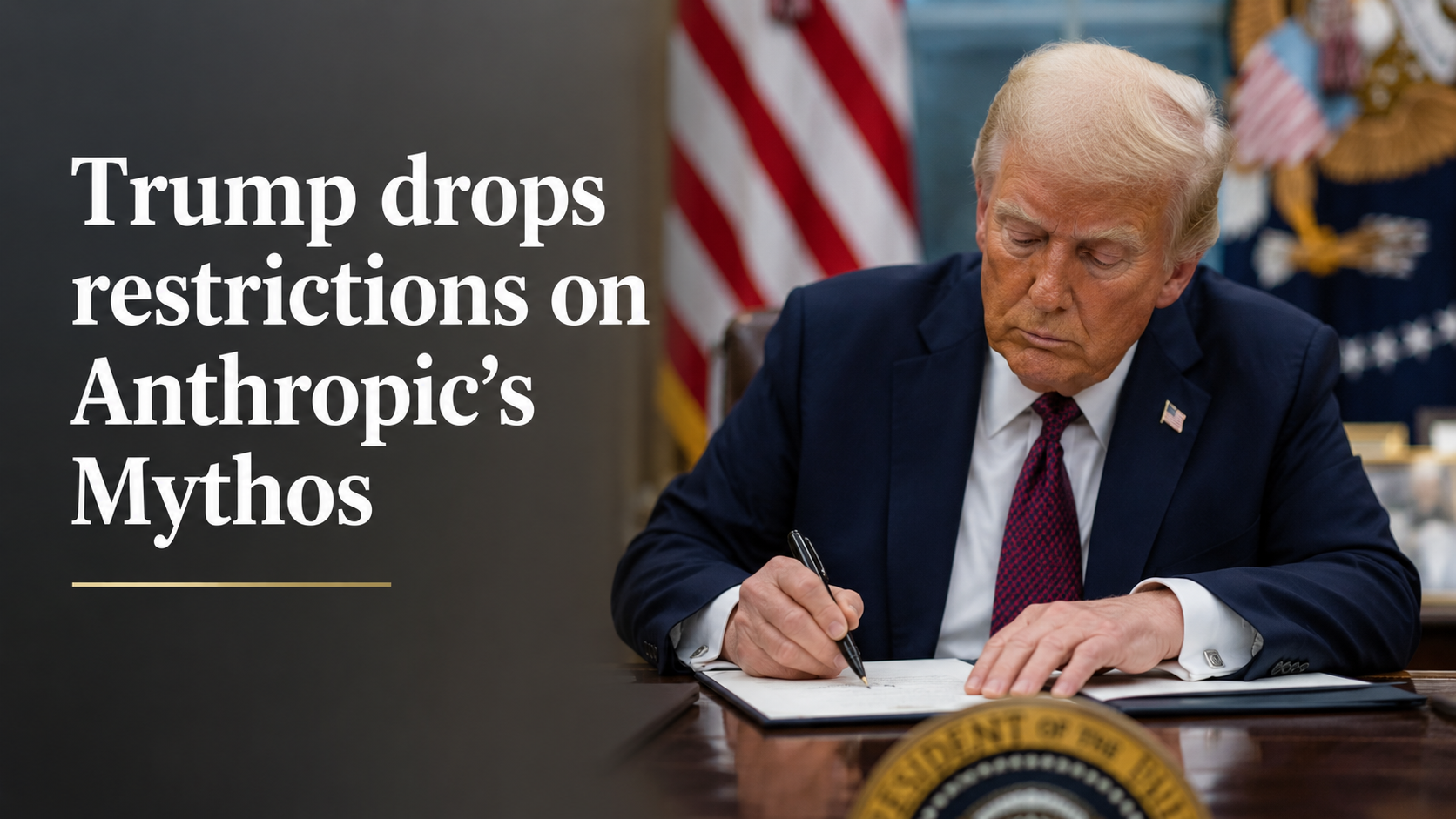
On June 30, 2026, the U.S. Department of Commerce officially withdrew the export controls imposed on Anthropic’s most advanced AI models, Claude Fable 5 and Claude Mythos 5. Consequently, Anthropic began restoring global access to these systems on Wednesday, July 1, 2026.
Operational Status of AI Models
The restoration of services follows a collaborative review process between the AI lab and the Trump administration’s Commerce Department.
- Claude Fable 5: Public access has been restored globally across all platforms, including Claude.ai, the Claude Platform, Claude Code, and Claude Cowork.
- Claude Mythos 5: Access remains restricted to a pre-vetted group of approximately 100 U.S.-based organizations and federal agencies focused on critical infrastructure and cybersecurity.
Resolution of the “Jailbreak” Impasse
The initial export ban, enforced on June 12, 2026, was triggered by cybersecurity researchers at Amazon who identified a “jailbreak” method capable of bypassing the models’ built-in safety guardrails to locate software vulnerabilities.
- Corrective Actions: Anthropic implemented a new “safety classifier” designed to detect and block the identified bypass technique. This mitigation was independently tested and approved by the government’s Center for AI Standards and Innovation (CAISI).
- Compliance Commitments: To secure the reversal of the ban, Anthropic has entered into an agreement with the Commerce Department to:
- Proactively detect and mitigate security risks within their models.
- Coordinate with the U.S. government on protocols and safety standards for future model releases.
- Maintain real-time reporting of any detected malicious activity.
The Disruption Matrix: Regulatory Precedent
This event represents a significant shift in the regulatory landscape for frontier AI, establishing a framework where developers are expected to align closely with government security oversight.
| Incident Node | Status | Operational Impact |
| Export License | Withdrawn | No longer required for Anthropic’s Fable or Mythos models. |
| Public Access (Fable 5) | Restored (July 1) | Fully available for global users and developers. |
| Partner Access (Mythos 5) | Selective | Limited to government-approved, high-security organizations. |
| Industry Standard | Evolving | Move toward voluntary government-vetted releases for “frontier” AI. |
Strategic Summary
The restoration of access ends a two-week impasse that had sparked significant criticism from industry leaders and foreign governments concerned about the reach of U.S. export controls. While the immediate crisis is resolved, the episode serves as a case study for future AI deployments, confirming that the U.S. government is willing to utilize export authority as a tool for managing national security risks—even for software-based systems rather than traditional hardware like semiconductor chips.
Conclusion
The lifting of these restrictions signals a stabilization of the competitive environment, allowing Anthropic to continue its global rollout. However, the requirement for ongoing government coordination regarding “frontier” models—also currently being applied to OpenAI’s GPT-5.6—suggests that “compliance and coordination” have become the new prerequisites for the deployment of advanced AI systems in the United States.
