


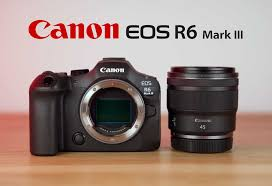
The high-performance hybrid imaging sector has shifted from baseline resolution upgrades toward heavy data processing pipelines designed for simultaneous photo and video workflows. Canon has officially reinforced its premium mid-range mirrorless segment with the rollout of the EOS R6 Mark III.
- Technical Mechanics: Dual Pixel Crossover AF II and 7K Open-Gate Architecture
- 1. Dual Pixel CMOS AF II with Register People Priority
- 2. Full-Sensor 3:2 Open Gate and 7K Cinema RAW Light
- 3. Co-Integrated 8.5-Stop In-Body Image Stabilization (IBIS)
- Hybrid Full-Frame Mirrorless Performance Matrix
- Deployment and Custom Action Configuration Protocol
- Conclusion
While retaining the refined, weather-sealed ergonomic chassis and intuitive button geography of its predecessor, the camera completely overhauls its internal sensor engineering and processing pipelines. Integrating a highly detailed 32.5-megapixel full-frame CMOS sensor with a dedicated DIGIC X processor, the R6 Mark III pairs high-speed action tracking with high-fidelity video tools, establishing a powerful new hybrid tool for professional creators.

Technical Mechanics: Dual Pixel Crossover AF II and 7K Open-Gate Architecture
An analytical teardown of the internal hardware components inside the EOS R6 Mark III reveals a system heavily optimized for high-bandwidth data handling.
                      [ THE R6 MARK III DATA PIPELINE ]
                                     │
         32.5MP Full-Frame Photo & 12-Bit 7K RAW Sensor Ingestion
                                     │
         ┌───────────────────────────┴───────────────────────────┐
         ▼                                                       ▼
┌─────────────────────────────────┐                     ┌─────────────────────────────────┐
│     DUAL PIXEL CMOS AF II       │                     │    5-AXIS CO-INTEGRATED IBIS    │
│ Spreads 6,097 selectable phase  │                     │ Syncs internal sensor-shift with │
│ points across the full frame to │                     │ lens optical stabilizers for an │
│ track eyes, animals, & vehicles.│                     │ 8.5-stop handshake advantage.   │
└────────────────┬────────────────┘                     └────────────────┬────────────────┘
                 │                                                       │
                 ▼                                                       ▼
┌─────────────────────────────────────────────────────────────────────────────────────────┐
│                         CINEMA LIGHT PRODUCTION DEPLOY                              │
│ - Internal 12-bit 7K RAW Light video capture using the full 3:2 Open Gate sensor.       │
│ - Subsampled 4K high-speed capture at 120fps for crisp, detailed slow motion.           │
│ - Dual storage infrastructure pairing a high-speed CFexpress Type B slot with SD UHS-II.│
└─────────────────────────────────────────────────────────────────────────────────────────┘
1. Dual Pixel CMOS AF II with Register People Priority
The defining focus architecture of the R6 Mark III is its updated Dual Pixel CMOS AF II system, which borrows advanced AI tracking technologies from Canon’s flagship EOS R1 and R5 Mark II models. The phase-detection grid spreads across the entire sensor surface, providing 6,097 selectable focus points for stills. Supported by custom deep-learning algorithms, the system instantly identifies and locks onto humans, animals, and vehicles. Its advanced Register People Priority tool allows wedding and commercial photographers to register up to 10 specific faces in advance, ensuring the camera stays locked onto key subjects even in dense, fast-moving crowds.
2. Full-Sensor 3:2 Open Gate and 7K Cinema RAW Light
For filmmakers and multimedia creators, the camera’s standout feature is its support for 3:2 Open Gate recording. Instead of cropping the sensor to standard widescreen ratios, the R6 Mark III captures the entire 35.9 x 23.9 mm active area at its full 7K resolution up to 30p. This uncropped format records internally in 12-bit Canon RAW Light (.CRM), giving editors immense flexibility to crop, pan, and reframe content into vertical 9:16 vertical clips or widescreen 2.39:1 cinema layouts from a single master file. For standard productions, the camera leverages this 7K canvas to output oversampled, hyper-detailed 4K video up to 60p, alongside a high-speed 4K 120fps mode for smooth slow-motion playback.
3. Co-Integrated 8.5-Stop In-Body Image Stabilization (IBIS)
To handle the tight pixel pitch of its higher-resolution 32.5MP sensor without suffering from micro-blurring, Canon has upgraded its 5-axis sensor-shift mechanism. When paired with stabilized RF lenses, the system uses real-time gyro sensors to deliver up to 8.5 stops of shake correction at the center of the frame and 7.5 stops at the edges. This allows landscape and street photographers to confidently shoot handheld at slow shutter speeds exceeding 1 second, while running content creators can capture stable, gimbal-free tracking shots on the move.
Hybrid Full-Frame Mirrorless Performance Matrix
This market reference ledger compares the key specifications, thermal thresholds, and hardware features of the modern mirrorless landscape, as verified by reviewers at Mashable India.
| Camera Body Model | Native Sensor Resolution | Maximum Electronic Shutter Burst | Internal Video Recording Limits | Integrated Storage Media Architecture |
| Canon EOS R6 Mark II | 24.2 Megapixels | 40 fps (Raw Burst Mode) | Over-sampled 4K up to 60p | 2x SDXC / SDHC (UHS-II Compliant) |
| Canon EOS R6 Mark III | 32.5 Megapixels | 40 fps w/ 0.5s Pre-Burst | 7K 30p Open Gate RAW / 4K 120p | 1x CFexpress Type B + 1x SD UHS-II |
| Sony a7 V | 33.0 Megapixels | 30 fps (14-Bit Compressed) | Sub-sampled 4K up to 120p (1.5x Crop) | 1x Combo CFexpress Type A + 1x SD |
Deployment and Custom Action Configuration Protocol
To configure the EOS R6 Mark III for high-speed action and sports photography while ensuring continuous data safety, execute this setup sequence:
1.Provision Dual Slots and Set Up Real-Time Media Routing:Storage Splitting.
Open the yellow wrench settings menu and navigate to Record Func+Card/Folder Sel. Set the recording function to Rec. Separately. Route all heavy 12-bit CRM RAW video files and primary CR3 RAW images to the fast CFexpress Type B slot in Slot 1, while mapping real-time JPEG proxies or secondary backups to the SD UHS-II card in Slot 2 to keep workflows safe.
2.Initialize the Continuous Shutter and Enable Pre-Burst Capture:Pre-Burst Activation.
Enter the red shooting menu, select Drive Mode, and toggle the camera to its 40fps electronic shutter setting. Scroll down to enable Pre-Continuous Shooting. When active, half-pressing the shutter button causes the camera to constantly buffer images, saving 20 full-resolution frames (0.5 seconds of action) onto the card the moment the shutter is fully pressed down.
3.Map Subject Priority and Calibrate Tracking Sensitivity:AF Customization.
Navigate to the purple autofocus menu and activate Subject Detection, setting your primary priority to Human, Animal, or Vehicle based on your target. Access AF Case Studies and adjust Tracking Sensitivity to -1 or -2 to ensure the camera stays locked onto your original subject even if temporary obstacles cross your frame.
Thermal Thresholds and Systemic Environmental Limits
While the physical audio upgrades and localized hardware smart features of the R6 Mark III perform exceptionally well during field deployment, professional operators must monitor its physical thermal limits during extended high-resolution video runs:
Data Saturation Thermal Shutdowns: Capturing internal 12-bit 7K RAW video at 60p demands massive amounts of processing power from the DIGIC X chip, generating significant internal heat. In standard 23°C environments, the camera will hit its thermal ceiling after roughly 23 minutes of continuous 7K RAW recording, triggering an automated safety shutdown to protect the sensor. To extend these recording windows during long studio sessions or hot summer shoots, filmmakers should toggle the Auto Power Off Temp setting from Standard to High, or utilize an external recorder via the full-sized HDMI Type-A port to bypass internal processing heat entirely.
Conclusion
The definitive technical evaluation of the Canon EOS R6 Mark III confirms that the mid-range mirrorless segment has evolved into a highly capable space for serious hybrid production. By combining a dense 32.5-megapixel sensor, an advanced 6,097-point tracking array, and uncropped 7K Open Gate RAW video into a rugged, weather-sealed body, Canon has delivered a versatile powerhouse that handles demanding commercial assignments with ease.
As modern media platforms continue to demand high-resolution stills alongside multi-format video content, success in the field will rely on using agile, all-in-one equipment. By offering lightning-fast 40fps burst speeds with pre-capture tracking and a flexible dual CFexpress/SD card layout, the EOS R6 Mark III provides professional storytellers with the speed, detail, and reliability needed to capture every fleeting moment perfectly.
