

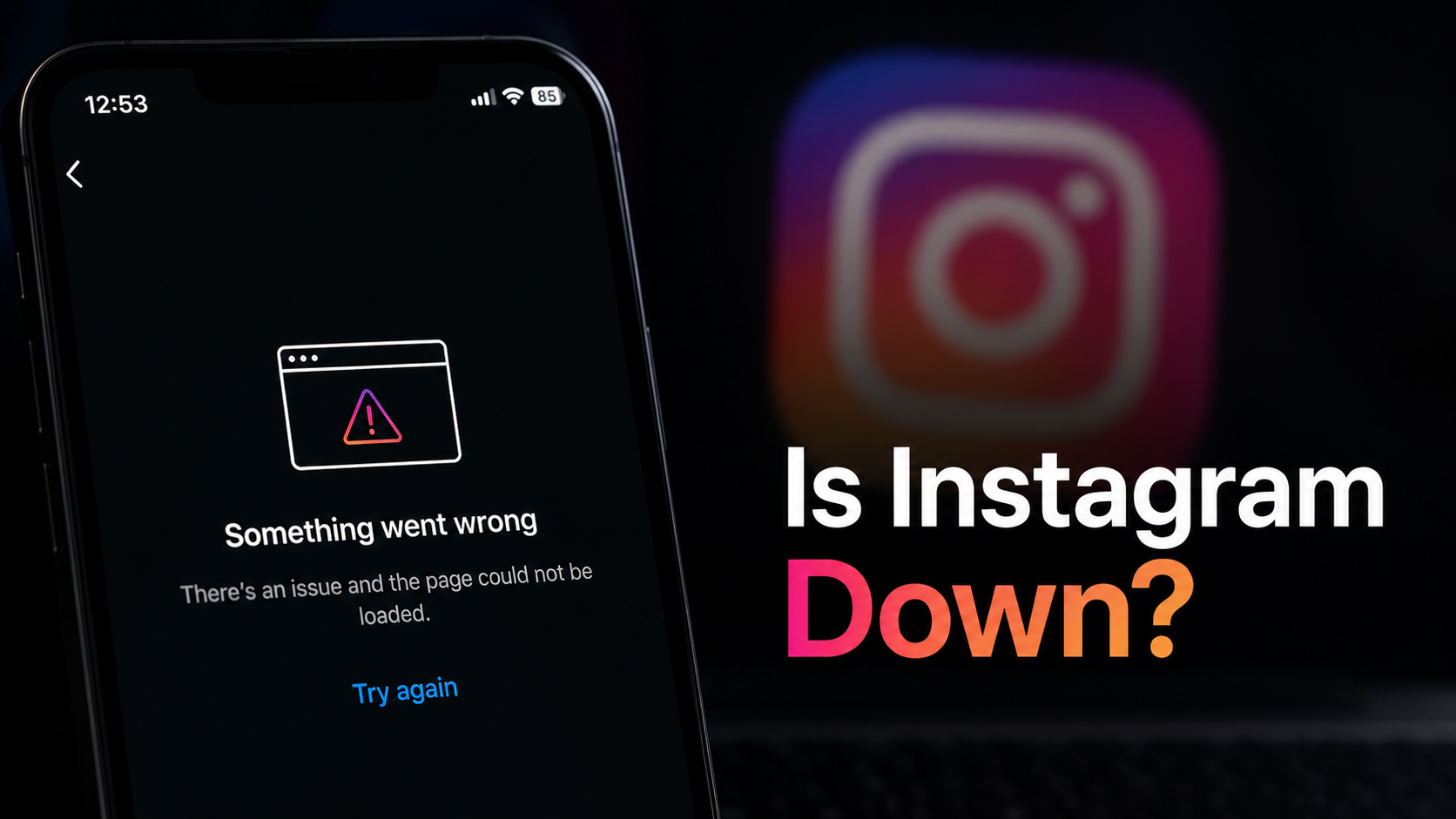
A major, widespread network failure across Meta’s infrastructure has triggered severe, global service outages across its core platforms, primarily impacting Instagram, Facebook, and WhatsApp. The technical incident, which began rising sharply on Thursday, June 11, 2026, caused sweeping system errors, preventing hundreds of millions of users from loading their feeds, publishing content, or logging into their profiles. Meta’s engineering teams confirmed the outage and scrambled to isolate the failure, which highlight the immense vulnerability of central internet infrastructure when a single monolithic network goes dark.
Technical Mechanics: Core DNS and BGP Routing Disruption
While Meta has not released a granular post-mortem report, preliminary network diagnostic telemetry reveals a familiar blueprint of cascading backend infrastructure failures.
- Border Gateway Protocol (BGP) Route Withdrawal: Real-time autonomous system monitoring indicated that Meta’s primary network routes were suddenly withdrawn from the global BGP routing tables. BGP functions as the postal system of the internet, directing traffic across the most efficient routes. When these routes vanished, internet service providers (ISPs) across the world could no longer locate Meta’s data servers, making it appear as though the platforms had completely disappeared from the internet.
- Domain Name System (DNS) Flood Failure: As a direct result of the BGP routing errors, Meta’s authoritative DNS servers became completely unreachable. This caused a massive backlog of lookup requests. When billions of user devices continuously tried to resolve domain names like
instagram.com, their apps timed out, generating endless “Waiting for connection” or “Cannot refresh feed” error codes. - The Content Delivery Network (CDN) Reconnect Strain: Once engineers began restoring core routing tables, a secondary issue emerged: the “thundering herd” effect. Millions of disconnected mobile applications simultaneously blasted reconnection and data requests at Meta’s Edge CDN caching nodes. This massive spike in API traffic strained database layers, causing intermittent login errors and broken media uploads even as core services were being brought back online.
Outage Diagnostics and Impact Assessment
The disruption rapidly expanded past a single country, pointing to a systemic failure inside Meta’s internal backbone network rather than a localized server glitch. The phrase “Instagram Down” quickly began trending globally as traffic patterns showed a massive surge across competing social platforms like X (formerly Twitter) and Telegram.
| Affected Node | Primary App Error | Underlying Systemic Issue | Systemic Recovery Latency |
| Feed & Media API | “Cannot refresh feed” / infinite loading spinners. | Edge servers unable to pull fresh media assets from core object storage. | Moderate; required staggered regional cache warming. |
| Authentication Engine | Forced account logouts; “Incompatible request” errors. | Central user directory databases choked by massive reconnection requests. | High; login servers throttled traffic to prevent server crashes. |
| Direct Messaging (DM) | Long delays sending texts; media uploads failing. | Real-time WebSocket connection channels collapsed due to core infrastructure drops. | Low; text routing recovered swiftly once BGP tables stabilized. |
Structural Vulnerabilities and Monolithic Risks
- The Perils of Centralized Infrastructure: Meta handles its massive data load by consolidating its hardware infrastructure into single, shared network loops. While this design is highly cost-efficient, it leaves the platform exposed to massive, systemic failure. A single bad configuration script or routing update can take down all Meta properties—Instagram, Facebook, Threads, and WhatsApp—simultaneously.
- The Digital Commerce Freeze: Modern social platforms are no longer just for entertainment; they are vital financial infrastructure for millions of small businesses, creators, and digital advertisers. A multi-hour outage completely freezes ad delivery, disrupts customer service channels, and causes immediate financial losses, proving how heavily the modern digital economy relies on a handful of tech platforms.
- The Media Strain Vector: When a massive platform like Instagram goes dark, user behavior shifts in an instant. Billions of users immediately flock to competing networks and outage-monitoring portals like DownDetector for updates. This sudden, uncoordinated shift in user traffic can cause secondary performance drops across completely unrelated web infrastructure.
Conclusion
The strategic breakdown of the June 2026 Meta outage serves as a stark reminder of the fragile nature of our centralized internet ecosystem. By anchoring its diverse portfolio of communication apps onto a shared, monolithic routing core, Meta remains vulnerable to cascading backend drops that can isolate billions of users in an instant.
According to tech tracking briefs published on Mashable, Meta’s engineering teams successfully stabilized the BGP routing tables and gradually brought services back to normal operations. However, the incident proves that as long as our primary digital communication channels remain consolidated within a few private corporations, short-term outages will continue to trigger massive, widespread disruptions across the globe.
